
Post
Corporate Interview Framing in the UAE: Plan Eyelines, Backgrounds and Useful Space
A well-spoken interview can still feel awkward when the subject looks past the wrong side of the camera, a bright window competes for attention or the crop leaves nowhere for a name caption. Corporate interview framing in the UAE deserves a deliberate decision before recording, because the composition affects how comfortably a viewer follows the speaker.
This guide focuses on the visual arrangement of an interview, rather than writing testimonial questions or recording location sound. Examples describe hypothetical UAE productions, not client results. There is no single cinematic frame that suits every brand. The useful choice depends on who is speaking, where the film will appear and what the surrounding image should communicate.
Choose the relationship with the viewer
Decide whether the subject will address the lens directly or speak to an interviewer beside it. Direct address can suit a concise explanation intended for the audience. An off-camera conversation can suit a documentary-style interview. Neither option is automatically more authentic; the direction should make the speaker comfortable and support the intended film.
Tell the subject where to look before the first usable answer. Repeatedly switching between the lens, interviewer and monitor can distract viewers, especially when clips are edited together. A clear explanation is usually more useful than correcting every small eye movement. Leave the speaker enough room to think and answer naturally.
Set the interviewer position deliberately
For an off-camera interview, place the interviewer close enough to the camera that the speaker’s face remains readable, while preserving the intended angle. Check the actual image rather than relying on a fixed distance. The subject’s seating position, lens choice and available space all influence what that relationship looks like.
In a hypothetical Dubai technology company’s office, the interviewer may need to move away from a busy doorway. Confirm that the new position still gives the desired eyeline before continuing. Mark positions discreetly when helpful, so a break does not accidentally create a noticeably different angle halfway through an answer.
Give the background a defined role
A background can establish the workplace, show relevant activity or provide a quiet setting for a focused message. Choose what should be recognisable and what should remain incidental. An impressive office is not automatically a useful background if every screen, reflection and passer-by competes with the person speaking.
Review screens, documents and visible names before recording. Remove or obscure information that should not appear, following the organisation’s permissions. Do not rearrange a scene to imply a capability or location the company does not actually have. The setting should support a credible account of the business rather than manufacture one.
Create separation without chasing a formula
Look for enough visual separation between the person and the background to make the subject clear. This might come from position, contrast, colour or focus. A very blurred background is a creative option, not proof of production quality. Keep any environmental detail that the story genuinely needs the viewer to understand.
For an Abu Dhabi consultancy interview, a calm meeting area may communicate more effectively than a crowded wall of awards. Check whether furniture edges or plants appear to grow out of the subject’s head in the chosen angle. Small position changes can resolve distracting alignments before anyone spends time trying to fix them in editing.
Plan the crop for the final destinations
Confirm the required horizontal, vertical and other versions before selecting the frame. A horizontal composition that places the speaker near one edge may leave little flexibility for a vertical crop. Do not assume that every camera setup can produce every version simply because the recording has a high pixel count.
Our guide to vertical video production covers the wider delivery format question. For the interview itself, preview representative crops with the speaker in position. If a separate setup is needed, allow time for it rather than discovering the limitation after the subject has left.
Reserve space for names and captions
Place a sample name and role caption in the preview, particularly if the speaker has a long title or the film needs two languages. Check that it does not obscure an important gesture or merge into a busy background. Keep the final platform’s practical display area in mind when reviewing the layout.
Subtitles also need readable space and contrast. The composition should work with the actual text treatment, not just an empty frame. For a bilingual Sharjah business film, Arabic and English lines can occupy different amounts of space. Review the proposed treatment on a phone before approving the setup for a long interview.
Make hands and posture intentional
Decide whether hands should appear and whether the subject will sit, stand or demonstrate something. Avoid a crop that repeatedly clips natural gestures in an uncomfortable way. A close frame may serve an intimate answer, while a wider view can explain the working environment or allow a useful physical demonstration.
Check chair stability, clothing arrangement and the subject’s comfort before rolling. Do not force an uncomfortable posture merely to preserve a composition. If someone naturally leans forward while speaking, evaluate the image through that movement. The frame needs to accommodate the real conversation, not only the still pose used for the initial check.
Coordinate multiple camera angles
When using another camera, make its angle and shot size sufficiently purposeful for the edit. Two nearly identical images may not provide the flexibility the team expects. Confirm consistent eyelines and a coherent spatial relationship, particularly if the final film intercuts questions, answers and reaction shots.
Check the cameras together for exposure and colour differences that could distract when cutting. Our colour workflow guide discusses consistency as a separate production discipline. Framing decisions should be documented alongside camera positions, so a later pickup can match the intended visual language.
Recheck changing conditions
An office background can change during the recording as daylight moves, screens wake up or staff enter the area. Agree who will watch for these changes without interrupting every answer. Where possible, finish a usable thought before making a nonurgent adjustment, and record an alternative take if the interruption affects the edit.
A location scout can reveal many of these constraints beforehand, while our location sound guide covers a different part of the interview setup. A beautiful background is not enough if the chosen position makes the conversation impossible to record clearly.
Approve a short test before the interview
Record a representative answer, with natural movement, then check the framing, eyeline, captions and intended crops. Listen to the recording as well. A short test exposes practical problems that are difficult to judge from a silent monitor, and gives the subject a chance to become familiar with the setup.
Infiniti in Media can help plan interviews through our commercial photography and video services. Contact the team with the film’s purpose, speakers, locations and delivery formats. A clear framing plan helps each interview contribute usable material to the wider brand story without relying on elaborate effects.
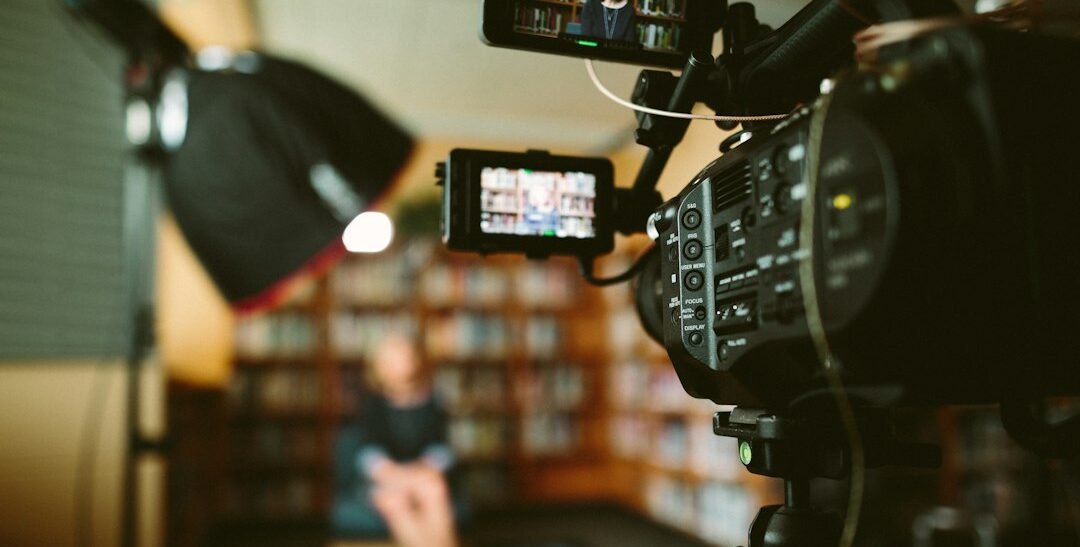
Illustrative production photograph: Sam McGhee / Unsplash. This is not presented as an Infiniti client shoot.