
Post
Commercial Photo Selection in the UAE: Choose the Final Images Before Retouching
A commercial shoot produces many technically strong photographs, but the final shortlist still fails to cover the website, campaign and product pages. Several near-identical frames are chosen while an important detail is missing. Commercial photo selection in the UAE works best when the review starts with intended use, clear criteria and a shared way to identify each image before retouching begins.
This guide concerns choosing the final photographs from a shoot. It is different from planning the original photography brief, organising a long-term media library or adjusting colour. The examples are hypothetical UAE business situations, not client projects or measured results. An attractive individual image is not automatically the right choice for every placement.
Agree what the shortlist must cover
Return to the approved deliverables and list the uses that need images. A corporate website may require a wide opening image, team photographs and smaller service details. An ecommerce range may require consistent views across products. Build the selection around those needs rather than choosing the first images that attract attention in the gallery.
For a hypothetical Dubai consultancy, six similar team portraits cannot replace a missing image showing the service environment. Mark the required categories before review. If a category was not captured, identify the gap honestly instead of stretching an unsuitable photograph into a role it cannot fulfil.
Separate technical review from business selection
Let the production team remove obvious problems first
The photographer should assess issues such as missed focus, unusable expressions, accidental obstructions and frames that do not meet the agreed standard. That first review should reduce noise without erasing meaningful alternatives. Avoid asking a client to make business choices from a gallery full of accidental duplicates and clearly unusable frames.
Retain the original material according to the agreed storage process. Marking an image as unsuitable for the current shortlist is not the same as permanently deleting it. Some adjacent frames may later help resolve a specific editing question, and the production team should control that decision through its normal workflow.
Use the client review for decisions only the client can make
The business may need to confirm product accuracy, staff representation, brand suitability or which setting best explains the service. Make these review responsibilities explicit. The client should not need to guess whether a technical defect can be repaired, while the photographer should not have to invent the commercial priority between two departments.
Prepare a proof gallery with stable references
Give every photograph a unique reference that remains consistent through selection, retouching and delivery. A contact sheet or review gallery can work if the references are readable and easy to communicate. “The third image on my phone” is unreliable when sorting order, screen size or filtering changes.
Label proofs clearly as review versions and explain what has and has not been adjusted. A low-resolution proof may be suitable for judging composition but not for assessing every fine detail. Where the client needs to inspect an important feature, provide an appropriate view rather than accepting a decision based on a thumbnail alone.
Define what ratings and flags mean
Agree a small set of statuses such as candidate, selected, needs clarification and not selected for this use. If star ratings are used, define them. A four-star image should not mean “final approval” to one person and “possibly useful” to another. Adobe’s flagging and rating guidance shows available organisational tools; the team still needs a shared meaning for its choices.
Keep selection status separate from retouching status. A photograph can be selected but awaiting a factual check, or approved for retouching but not yet approved for publication. Combining all those stages into a single green label makes it difficult to know what the production team should do next.
Review the set, not only individual favourites
Place the proposed images together and look for repetition, gaps and inconsistent emphasis. Does the set cover the promised subjects? Are several frames doing the same job? Are the selected images visually compatible without becoming monotonous? The strongest shortlist often balances hero images, useful supporting material and the details customers need to understand the offer.
For an Abu Dhabi hospitality business, a dramatic room photograph may deserve a prominent place, but the full set may still need practical views that explain the space. The relevant choices depend on the agreed project. Do not use this as permission to add unrelated content or claim facilities that were not part of the shoot.
Test likely crops before committing
A wide photograph may lose the subject when cropped vertically, while a close portrait may leave no room for a headline. Preview the intended formats before selecting the final count. Keep important details and faces inside practical boundaries, and check that any planned text remains readable without covering the subject.
This does not mean forcing one image into every format. Sometimes a different frame is the better choice. Refer back to the corporate photography brief so the selection reflects the planned placements rather than a new set of assumptions introduced after production.
Record retouching requests precisely
Attach comments to the image reference and describe the actual concern. “The label must remain legible” is more actionable than “make it premium.” Distinguish a requested correction from a change to the product, setting or person’s appearance. Confirm which changes are appropriate to the agreed scope and the truthful presentation of the subject.
Do not assume every problem is fixable in retouching. Ask the photographer to assess feasibility before approving a frame that depends on a difficult reconstruction. If the image must accurately represent a product, avoid edits that change the features a customer relies on when deciding what to buy.
Give one person responsibility for the final decision
Collect specialist feedback where necessary, but designate who resolves conflicting requests. Two reviewers may prefer different frames for valid reasons. Record which use the final choice serves, rather than combining contradictory comments into an instruction the editor cannot interpret.
Set a clear point at which the shortlist is approved for retouching. If selections change later, record the revised references and review the effect on scope and timing with the production team. This protects both sides from working on different versions of the list without realising it.
Check the delivered files against the approved shortlist
Match the finished files to the agreed references and requested uses. Check that no selected image is missing and that the output versions are identified clearly. Review the actual exported files, including the intended crop, rather than assuming that approval of the proof also approved every delivery format.
Then place the approved assets into a maintained photo and video library with their usage information and current status. Selection is a project decision; library management keeps that decision understandable when another team needs the material later.
If some checks need to happen before the set is dismantled, consider a tethered capture review workflow. It supports on-set corrections while keeping final image selection as a separate decision.
Build a shortlist that serves the business
Infiniti in Media can help connect the shoot brief, selection process and final delivery through our commercial photography services. Contact the team with the intended placements and required subjects to discuss a review process before the shoot, rather than leaving the final choice to a rushed exchange of screenshots.
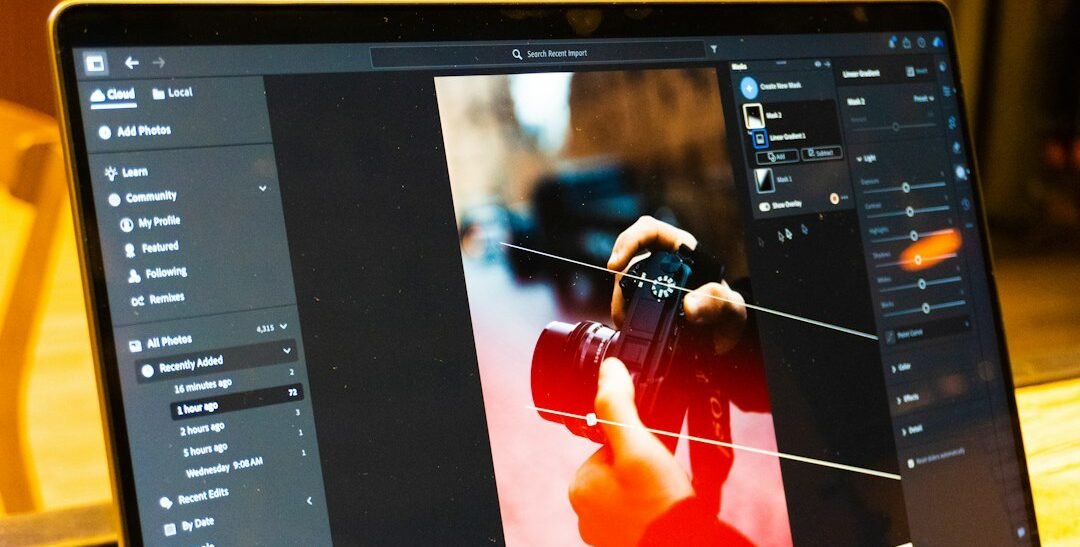
Illustrative stock photograph: Zulfugar Karimov / Unsplash. It does not depict an Infiniti client project.